Introduction: How long-term care is delivered in Ireland, and how population changes will affect demand
This paper is the first in a two-part series examining long-term care in Ireland and whether the insurance industry has a role in meeting Ireland’s growing long-term care challenge.
This paper will cover the long-term care challenge by discussing the current provision of long-term care in Ireland and how demographic changes are likely to impact future demand.
Part 2 of the series will then consider how the insurance industry can play a role in meeting Ireland’s long-term care challenge, drawing on international examples for context.
Many developed economies are grappling with significant challenges in providing care for their ageing populations. In several countries, the demand for long-term care services already outstrips supply, and this 'care gap' is expected to widen as the need for these services continues to increase with an ageing population.1
In Ireland, the provision of long-term care services is currently supported by the Nursing Home Support Scheme (NHSS), more commonly known as the Fair Deal scheme. While Ireland has one of the youngest populations in the European Union (EU), it is also experiencing rapid ageing. This demographic shift is poised to place considerable strain on public finances due to the rising costs associated with ageing.2 As the demand for long-term care services grows, the financial burden on both the state and individuals is expected to increase significantly.
This paper assesses the current state of the Fair Deal scheme and considers Ireland’s demographic outlook to understand how the long-term care challenge is likely to evolve in an Irish context.
The provision of long-term care in Ireland
The Fair Deal scheme is a financial support system in Ireland to help mitigate the cost of long-term nursing home care. The scheme helps people by capping the cost they would pay for care based on an assessment of their financial means at the time they require care. Specifically, individuals are required to contribute 80% of their assessable income towards the cost of nursing home care. Assessable income includes items such as earnings, pensions, social welfare benefits and rental income, with certain exclusions applied to ensure individuals retain funds for personal expenses. Where individuals share an income through marriage or a partnership, only their share of the income is included for assessment purposes.
In addition to the income contribution, individuals must also contribute up to 7.5% of the value of their assets annually, where, similar to income, only the individual’s share in an asset is considered for assessment purposes. The asset assessment encompasses property, savings, investments and other valuables. Notably, the principal residence is included in this assessment, but the contribution from the principal residence is capped at 7.5% per annum for a maximum of three years, leading to a total cap of 22.5% of the individual’s share of the principal residence (or 11.25% of the property value where one member of a couple requires long-term care). This cap also applies to farms and businesses under specific conditions.
Figure 1 provides an example of how weekly contribution amounts vary based on individuals' financial circumstances, assuming a weekly nursing home cost of €1,123 (the average cost of a private nursing home in 2023).3
Figure 1: Contributions from example scheme participants
| Profile | Income & Assets | Year 1-3 Contribution Weekly | Year 4+ Contribution Weekly | Eligibility for Scheme on basis of €1,123 weekly cost |
|---|---|---|---|---|
| 1. Low Income + No Assets | Income: €265/week | €212 | €212 | Eligible – state pays remainder |
| 2. Moderate Income + Home | Income: €350/week Home: €300k Other Assets: €40k |
€718 | €286 | Eligible – state pays remainder |
| 3. High Income + Home + Other Assets | Income: €650/week Home: €600k Other Assets: €100k |
€1,478 | €612 | Ineligible years 1 – 3 |
| 4. High Income + Home + Large Assets | Income: €800/week Home: €1m Other Assets: €1m |
€3,473 | €2,030 | Ineligible |
It can be seen that, while the scheme offers material contributions towards the cost of care for all but the wealthiest, even individuals with relatively modest assets or income can incur considerable copayments under the current care funding structure. Notably, for individuals 2, 3 and 4, the weekly contributions for the first three years are greater than the individuals’ weekly income, which can be expected to create some financial challenges. In light of this, the scheme offers an ancillary state support mechanism, commonly referred to as the Nursing Home Loan, to address potential liquidity issues. This loan allows individuals to defer the asset-based contribution, with repayment deferred until after the individual's death or upon the sale of the property. This provision ensures that participants are not compelled to liquidate assets prematurely.
The current picture
Ireland’s current nursing home capacity
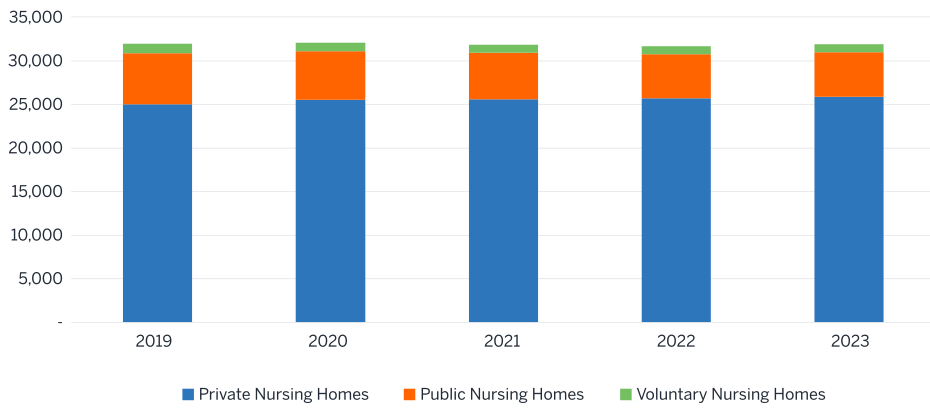
There were 31,901 nursing home beds registered with the Health Information and Quality Authority (HIQA) as of June 2023, representing a slight decrease of 0.2% since December 2019.4 Of these beds, 81% are in private nursing homes, while 16% are in public nursing homes, and 3% are in voluntary nursing homes.5
Figure 2: Number of HIQA registered beds, 2019–2023
Source: Featherstone, T., & Tripathi, P. (March 2024). Spending review 2023: Expenditure review of the nursing home support scheme and the impacts of Covid-19. Irish Government Economic and Evaluation Service. Retrieved 1 June 2026 from https://assets.gov.ie/288198/d0a3be32-55f9-4503-af37-873c2e66bc4c.pdf.
Notably, the number of beds in private nursing homes has increased by 3.6% since 2019, whereas public nursing home beds have decreased by 12.9%.
In 2023, the Fair Deal scheme supported approximately 22,000 individuals. This represents a state expenditure of about €45,000 per person in the scheme for that year alone. Contributions from scheme clients averaged €16,500 in that year, although the range of contributions paid by individual clients is expected to vary widely. Specifically, clients with higher-value residences typically face much larger payments than those with less valuable or no properties.
In recent times, there has been a notable shift in the distribution of residents between private and public nursing homes. As of April 2023, 80.9% of Fair Deal scheme residents are in private nursing homes, compared to 77.9% in January 2019. This trend indicates an increasing reliance on private sector provision within the scheme.
Financing long-term care in Ireland
The Exchequer is the primary source of funding for the Fair Deal scheme. In 2023, the Fair Deal scheme budget allocation stood at €1.12 billion. This represents 1% of the total expenditure in 2023 of €115 billion.6
The overall breakdown of the Fair Deal scheme expenditure shows that approximately 73% came from Exchequer funding, with the remaining 27% being funded by client contributions. This distribution has remained relatively stable since 2019, with a slight increase in the proportion of client contributions observed in 2022, possibly due to increases in property valuations.
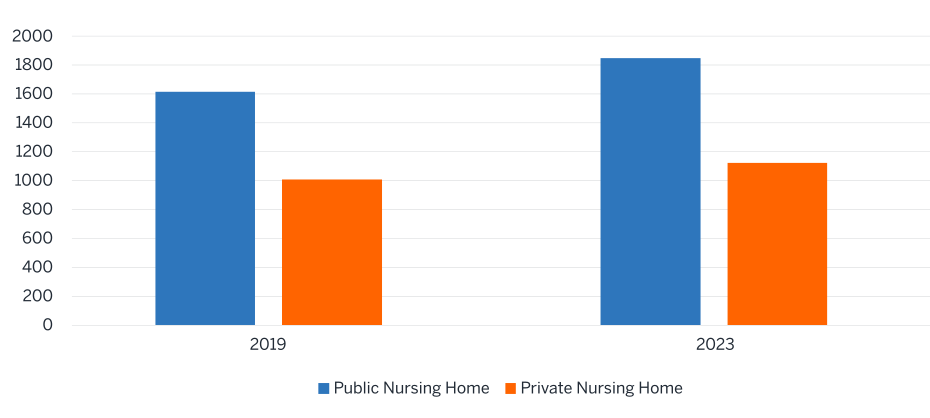
As of April 2023, the average weekly cost for a bed in a public nursing home was €1,850, an increase from €1,617 in 2019 (14.4%). In contrast, the average weekly cost for a bed in a private nursing home was €1,123, up from €1,007 in 2019 (11.5%).7 Despite the high weekly costs for services, residents often incur a range of additional out-of-pocket expenses for items such as entertainment, social activities and personal services, which are not covered by the scheme. These additional expenses can amount to several hundred euros per month.
Figure 3: Average weekly cost of nursing home bed
Source: Featherstone, T., & Tripathi, P. (March 2024). Spending review 2023: Expenditure review of the nursing home support scheme and the impacts of Covid-19. Irish Government Economic and Evaluation Service. Retrieved 1 June 2026 from https://assets.gov.ie/288198/d0a3be32-55f9-4503-af37-873c2e66bc4c.pdf.
Private nursing homes have raised ongoing concerns about the funding gap between public and private facilities. They argue that the current model is inequitable and fails to account for the actual cost of delivering care in the private sector. In response, private providers and their representative organisations have been campaigning for funding parity with their public counterparts. However, achieving full alignment in funding would significantly increase the overall cost of long-term care to the state, prompting important questions about affordability and the long-term sustainability of such a policy shift.
Demographics: Older adults in Ireland’s Fair Deal scheme
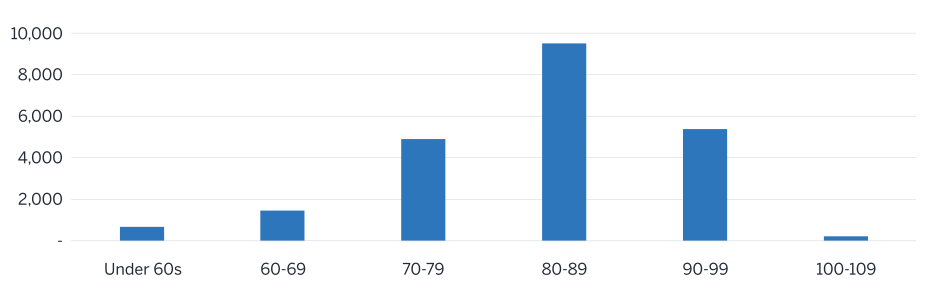
As would be expected, the majority of clients in the Fair Deal scheme are older adults.
Figure 4: Age profile of Fair Deal scheme clients, May 2023
| Age Group | Under 60s | 60–69 | 70–79 | 80–89 | 90-99 | 100–109 |
|---|---|---|---|---|---|---|
| No. of people | 671 | 1,458 | 4,893 | 9,518 | 5,395 | 216 |
| % of Fair Deal residents | 3% | 6.60% | 22% | 43% | 24.40% | 1% |
| % of age cohort of overall population | 0.02% | 0.30% | 1.40% | 6.20% | 19.70% | 29% |
Source: Featherstone, T., & Tripathi, P. (March 2024). Spending review 2023: Expenditure review of the nursing home support scheme and the impacts of Covid-19. Irish Government Economic and Evaluation Service. Retrieved 1 June 2026 from https://assets.gov.ie/288198/d0a3be32-55f9-4503-af37-873c2e66bc4c.pdf.
This demographic makeup highlights the challenge Ireland will encounter in sustaining services for those in need as the population continues to age.
Ireland’s changing demographics will affect long-term care insurance needs
Ireland’s projected demographics: Shifting to a higher old-age dependency ratio
In June 2024, the Department of Finance released a report on Ireland’s changing demographics.8 A key extract from the report is as follows:
‘Compared with many other EU countries, Ireland’s demographic structure is relatively favourable at present. The median age of the population (39 years) is the second youngest in the EU, while Ireland has the highest share of the population aged 19 years or under (26%) and the second lowest share of the population aged 65 years or above (15%). However, in common with other advanced economies, Ireland’s demographic structure is set to change significantly in the decades ahead.
‘In 2022, the working-age population (20-64 years old) amounted to c. 3 million while those aged 65 and above (a proxy for the retirement age cohort) amounted to c. 760 thousand. This implies an old age dependency ratio of almost 26 per cent at present. Put another way, there are currently 4 people of working age for each person of retirement age in Ireland, compared with the EU average of 2.8.
‘While Ireland’s population profile is favourable at present, over the coming decades, the rate at which the population is ageing will accelerate. A key demographic shift will include an increase in the older age groups (65+) and a relative decrease in the working age-population. Together, these two trends will lead to an increase in Ireland’s old age dependency ratio to 48 per cent by 2050.’
In addition, projections from the Central Statistics Office (CSO) suggest that the population age 85 and over will rise significantly from 87,100 in 2023 to 304,900 by 2051, indicating a potential increase in demand for the Fair Deal scheme in the coming decades.9
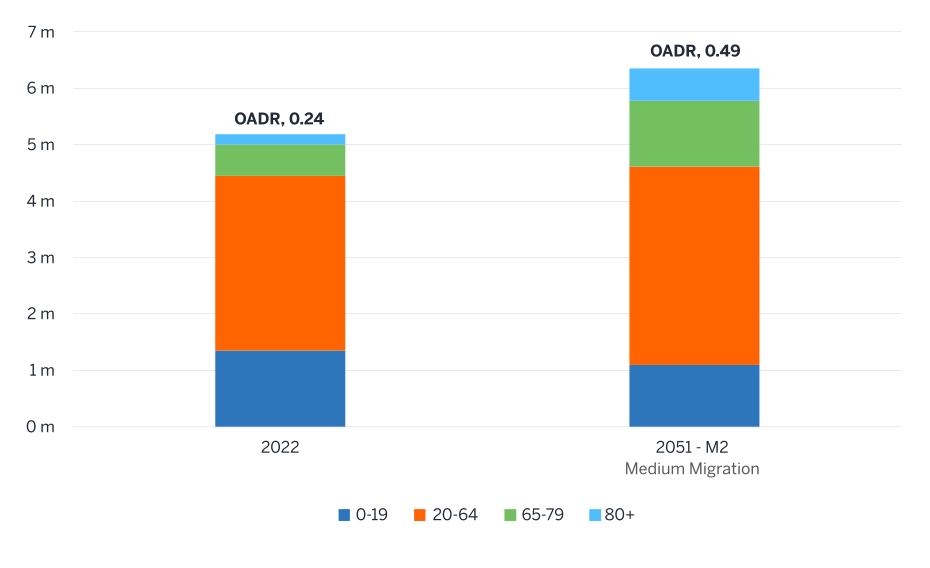
Figure 5 illustrates this expected population shift by age group, comparing the 2022 population with projections for 2051 under the CSO’s M2 scenario, which assumes moderate net migration.10 Notably, the proportion of individuals age 65–79 and 80-plus increases significantly by 2051, resulting in a marked increase in the old age dependency ratio (OADR) (population age 65-plus divided by population age under 20), from 0.24 to 0.49.
Figure 5: Change in population age profile, 2022–2051
Source: Central Statistics Office. (16 July 2024). Population and labour force projections 2023-2057. Retrieved 1 June 2026 from https://www.cso.ie/en/releasesandpublications/ep/p-plfp/populationandlabourforceprojections2023-2057/data/.
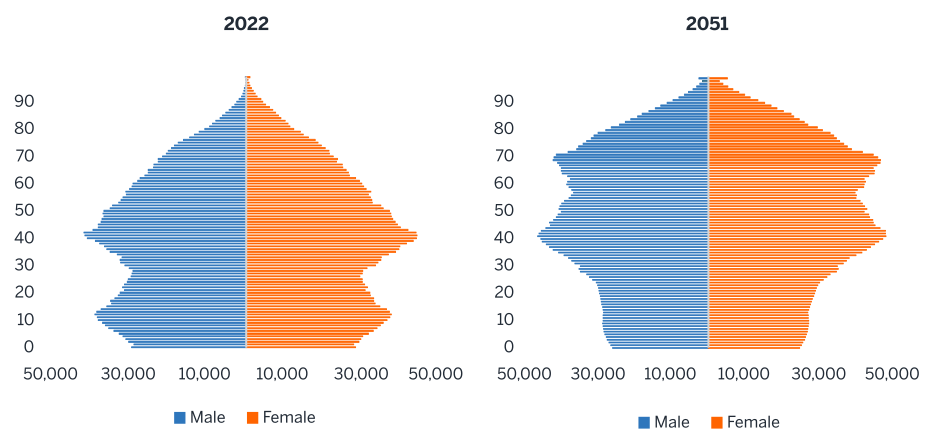
A closer look at the M2 scenario reveals the striking shift in the population's age profile. In the pyramid chart in Figure 6, the distribution of older individuals in 2051 is much more pronounced, with the chart becoming noticeably more ‘top-heavy.’
Figure 6: Distribution of older individuals, 2022–2051
Source: Central Statistics Office. (16 July 2024). Population and labour force projections 2023-2057. Retrieved 1 June 2026 from https://www.cso.ie/en/releasesandpublications/ep/p-plfp/populationandlabourforceprojections2023-2057/data/.
In light of this, it is evident that both the Irish public and the state face significant challenges in providing suitable care for an ageing population. Firstly, there is a clear need to scale up services to ensure there are enough available beds. Based on the CSO projections,11 and assuming similar rates of morbidity to today (albeit acknowledging this is a simplification), the demand for the Fair Deal scheme in 2051 would be approximately 70,000 people. This is over double the total amount of beds currently available in the country, despite excluding those in nursing homes not making use of the Fair Deal scheme. Including these groups could see the total number of beds required closer to 90,000—meaning scaling up services to three times where they are today in only 25 years.
Financing: As Ireland ages, funding long-term care will pose a challenge
Given the demographic shift, funding the necessary services is expected to pose a significant challenge, particularly in light of the substantial share of costs currently borne by the Exchequer. Assuming the services can be scaled up to meet rising demand, the costs that the Exchequer would be incurring to provide such services would be closer to €3.5 billion, up from €1.12 billion in 2023, before allowing for any inflation in care costs or the cost of major infrastructure developments. On this basis, the Fair Deal scheme’s share of total government expenditure would rise from around 1% to approximately 3%, based on current budget levels. Moreover, with the old age dependency ratio set to rise significantly, increasing funding for long-term care services to meet the growing demand may present considerable challenges, given the tax base is not expected to grow at a comparable rate. While it is possible that the government could increase the amount of copayment required by clients (effectively reduce the level of subvention from the scheme), such a move might be unpopular politically. Looking even more long term, the significant reduction in property ownership rates among younger generations, if carried through to older ages over time, has the potential to create further challenges in terms of the financing of the scheme.
Conclusion: How Ireland’s rapid ageing will affect long-term care insurance needs
At present the vast majority of long-term care needs are being financed through the Fair Deal scheme. While this approach has served Ireland well to date, the demographic outlook is clear: Ireland’s population is ageing rapidly. The cost to the Exchequer is expected to rise sharply, straining public finances at a time when the working-age population, the main source of tax revenue, is set to decline relative to the retired population.
Against this backdrop, there is a clear case for exploring new approaches to funding long-term care. One such approach is the consideration of long-term care insurance (LTCI). This will be examined in Part 2 of this series.
How Milliman can help
As a global leader in actuarial consulting and risk management, Milliman is uniquely positioned to support stakeholders in developing innovative, practical and sustainable solutions for Ireland’s long-term care challenges. Our expertise can help guide the design, implementation and ongoing management of LTCI products tailored to the Irish and other European markets. If you would like to discuss how Milliman can support your organisation, please don’t hesitate to contact us.
1 Jensen, S. E. H., Pinkus, D., & Ruer, N. (23 January 2025). Prepare now: Europe must get ready for the coming long-term care surge. Bruegel. Retrieved 1 June 2026 from https://www.bruegel.org/policy-brief/prepare-now-europe-must-get-ready-coming-long-term-care-surge.
2 Ireland Department of Finance. (June 2024). Population ageing and the public finances in Ireland - changing demographics. Retrieved 1 June 2026 from https://assets.gov.ie/static/documents/population-ageing-and-the-public-finances-in-ireland-changing-demographics.pdf.
3 Featherstone, T., & Tripathi, P. (March 2024). Spending review 2023: Expenditure review of the nursing home support scheme and the impacts of Covid-19. Irish Government Economic and Evaluation Service. Retrieved 1 June 2026 from https://assets.gov.ie/288198/d0a3be32-55f9-4503-af37-873c2e66bc4c.pdf.
5 Voluntary nursing homes are nursing homes run by non-commercial entities such as charities or religious orders.
6 Central Statistics Office. (19 April 2024). Government finance statistics 2023 (April 2024). Retrieved 1 June 2026 from https://www.cso.ie/en/releasesandpublications/ep/p-gfsa/governmentfinancestatistics2023april2024/keyfindings/#:~:text=Total%20government%20revenue%20increased%20to,more%20than%20the%20previous%20year.
7 Featherstone, T., & Tripathi, P., op. cit.
8 Ireland Department of Finance, op. cit.
9 Featherstone, T., & Tripathi, P., op. cit.
10 It is important to note that eligibility for the Fair Deal scheme is based on ordinary residence in Ireland (i.e., having lived in the state for the previous 12 months or intending to reside there for the following 12 months), meaning that the scheme is also accessible to the migrant population.
11 Central Statistics Office. (16 July 2024). Population and labour force projections 2023-2057. Retrieved 1 June 2026 from https://www.cso.ie/en/releasesandpublications/ep/p-plfp/populationandlabourforceprojections2023-2057/data/.